Where Can You See Golden Monkeys in Rwanda?
November 27, 2026
What Do Golden Monkeys Eat?
November 27, 2026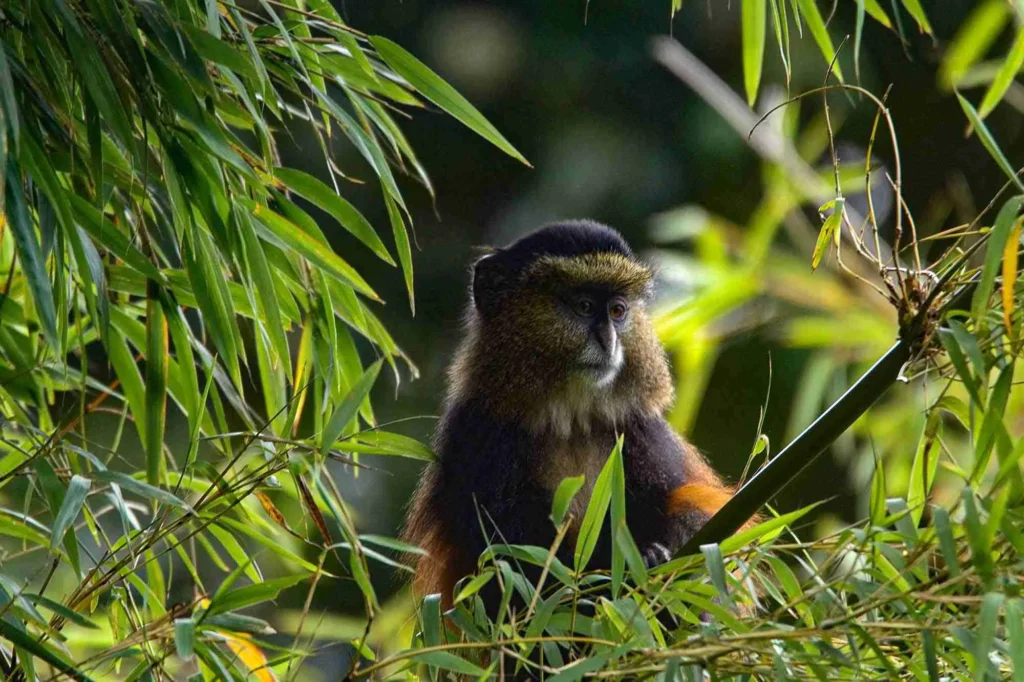
What Makes Golden Monkeys Different From Other African Primates? Discover Their Unique Features, Behaviour and Habitat
What makes golden monkeys different from other African primates? Africa is home to an extraordinary variety of primates, ranging from mountain gorillas and chimpanzees to baboons, colobus monkeys, and several species of smaller forest-dwelling monkeys. Each species has distinctive physical characteristics, feeding habits, social structures, and environmental adaptations. Among these fascinating animals, golden monkeys stand out because of their beautiful golden-orange fur, energetic movements, specialised habitat preferences, and remarkable association with the bamboo forests of the Virunga Mountains. Scientifically known as Cercopithecus mitis kandti, these endangered primates are a distinctive subspecies of the blue monkey and are among the most interesting wildlife attractions in Uganda and Rwanda.
Unlike many other African primates that occupy extensive geographical ranges and different ecological environments, golden monkeys are particularly associated with the high-altitude forests of the Virunga region. Their specialised relationship with bamboo vegetation, lively social behaviour, and striking appearance make them especially interesting to wildlife researchers and international travellers. Observing them in their natural habitat provides an opportunity to understand how different primate species adapt to particular environmental conditions.
For travellers planning Uganda Safaris, Rwanda Safaris, Rwanda Tours, and Uganda Adventures, golden monkey tracking offers a unique opportunity to discover a different side of African wildlife. Visitors can encounter these fascinating animals in Mgahinga Gorilla National Park in Uganda and Volcanoes National Park in Rwanda. At Kaara Safari Adventures Ltd, we believe that understanding the differences between African primates makes every wildlife encounter more meaningful, educational, and memorable. This guide explores the physical characteristics, behaviour, feeding habits, habitat, and conservation importance that make golden monkeys special.
What Makes Golden Monkeys Physically Different From Other African Primates?
Why Are Golden Monkeys So Easy to Recognise?
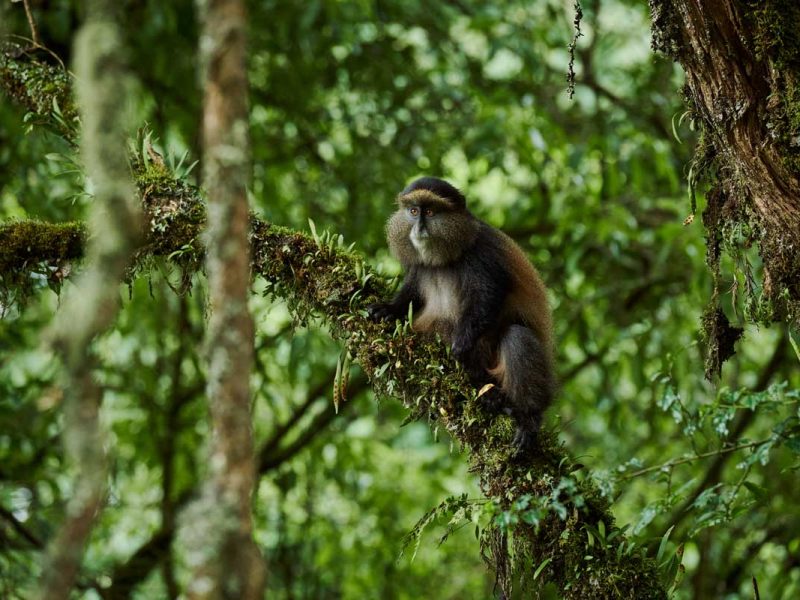
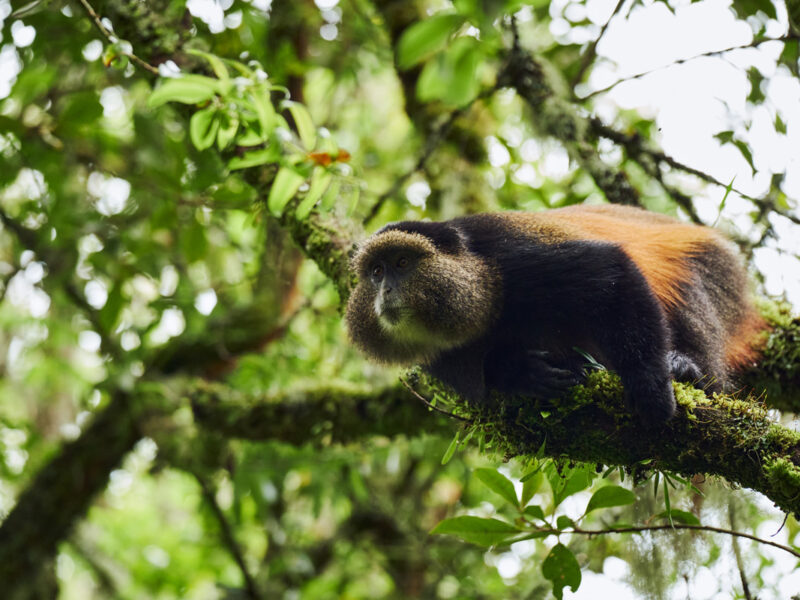
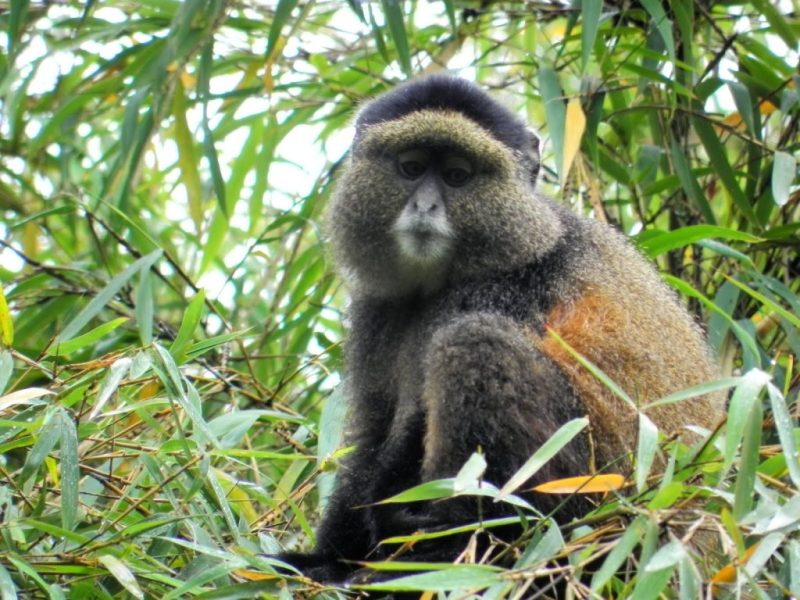
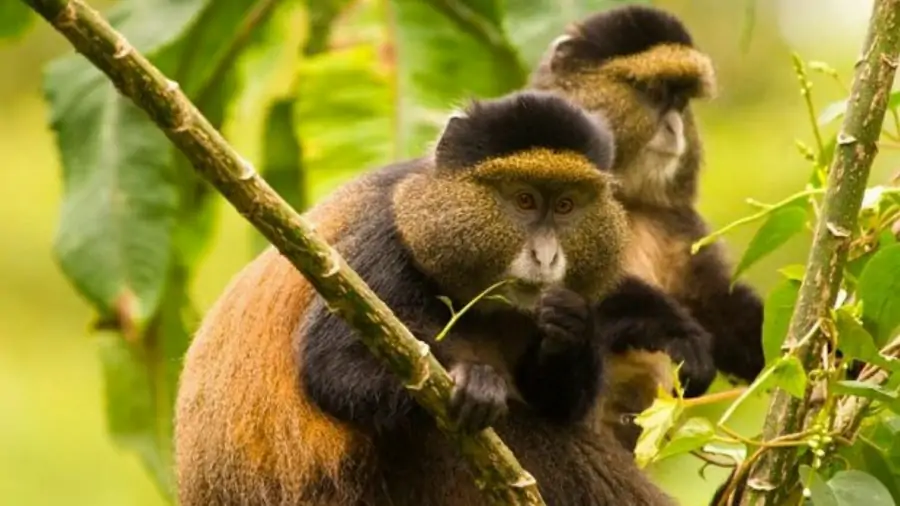
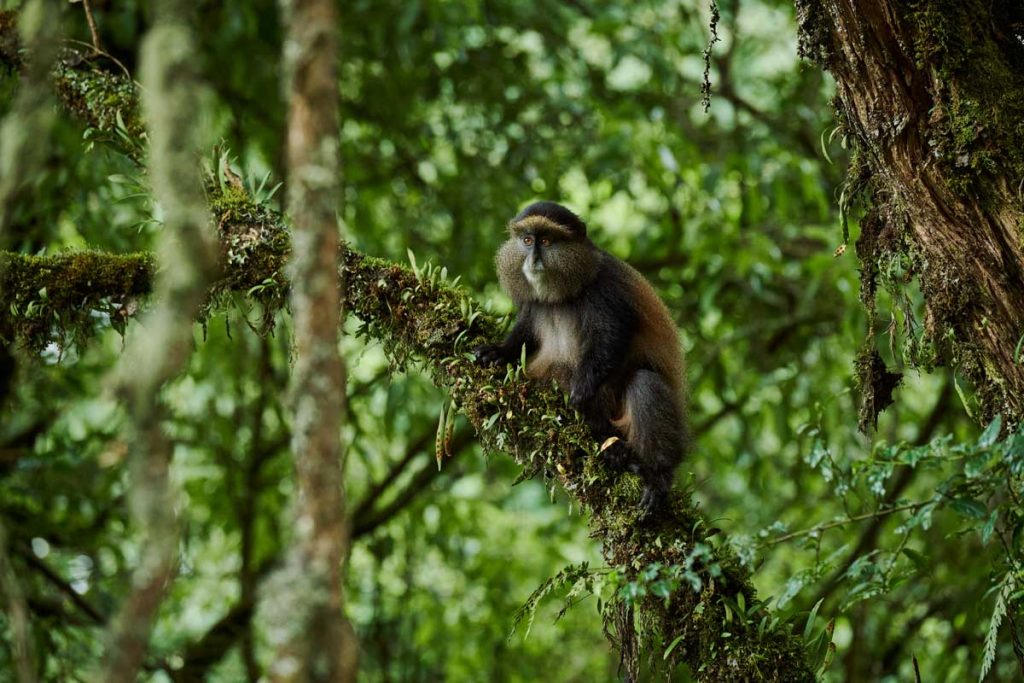
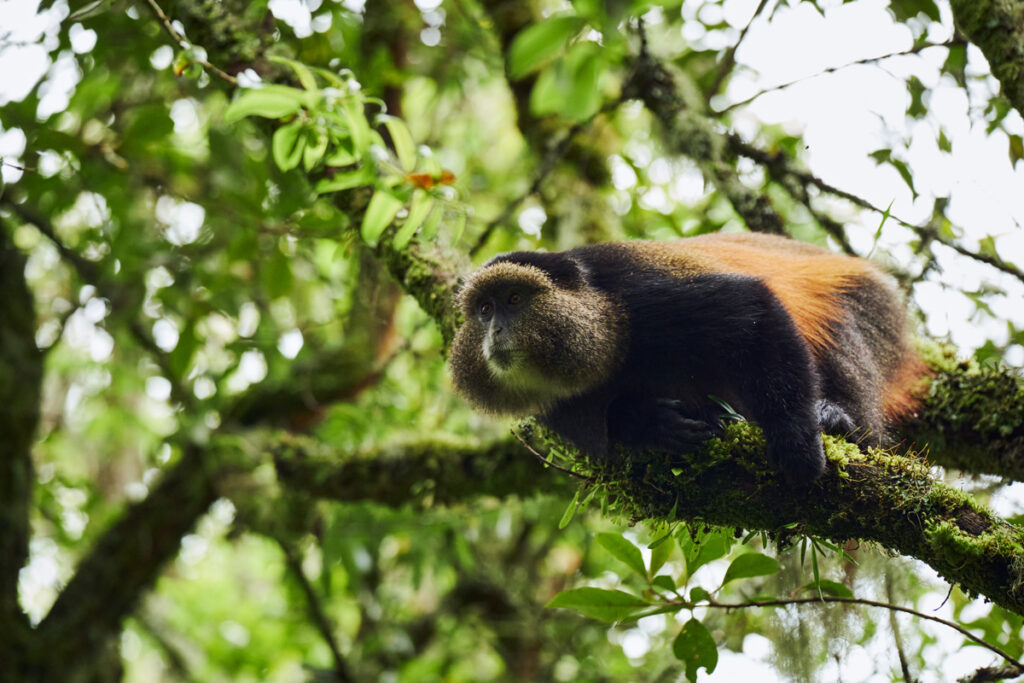
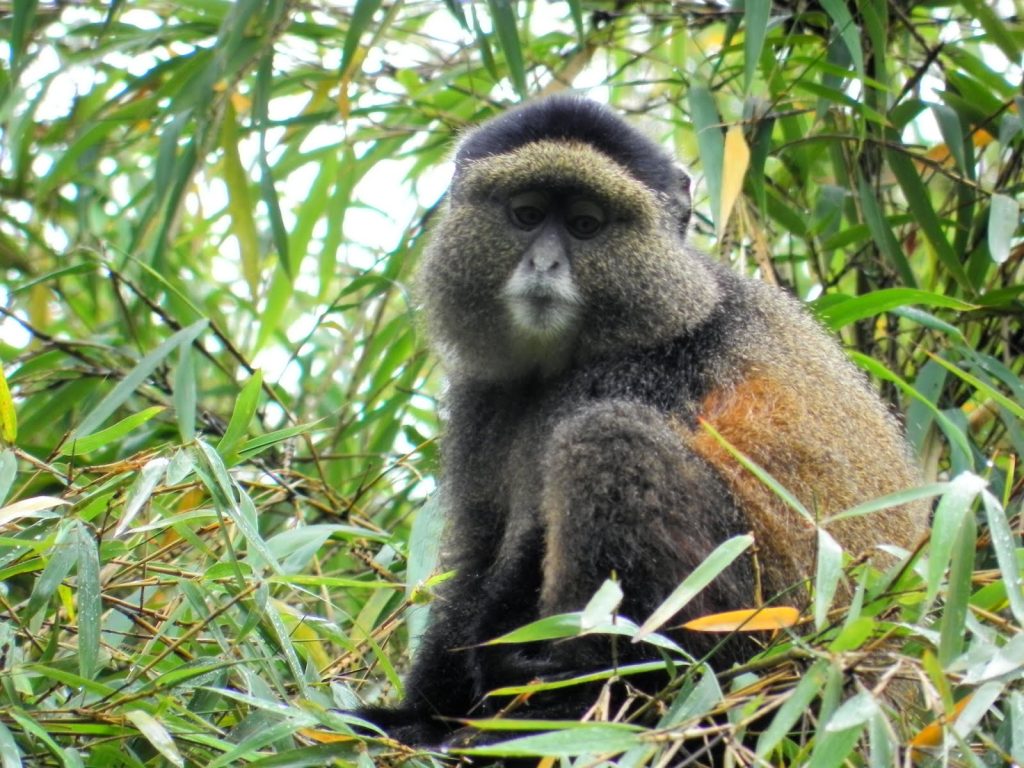
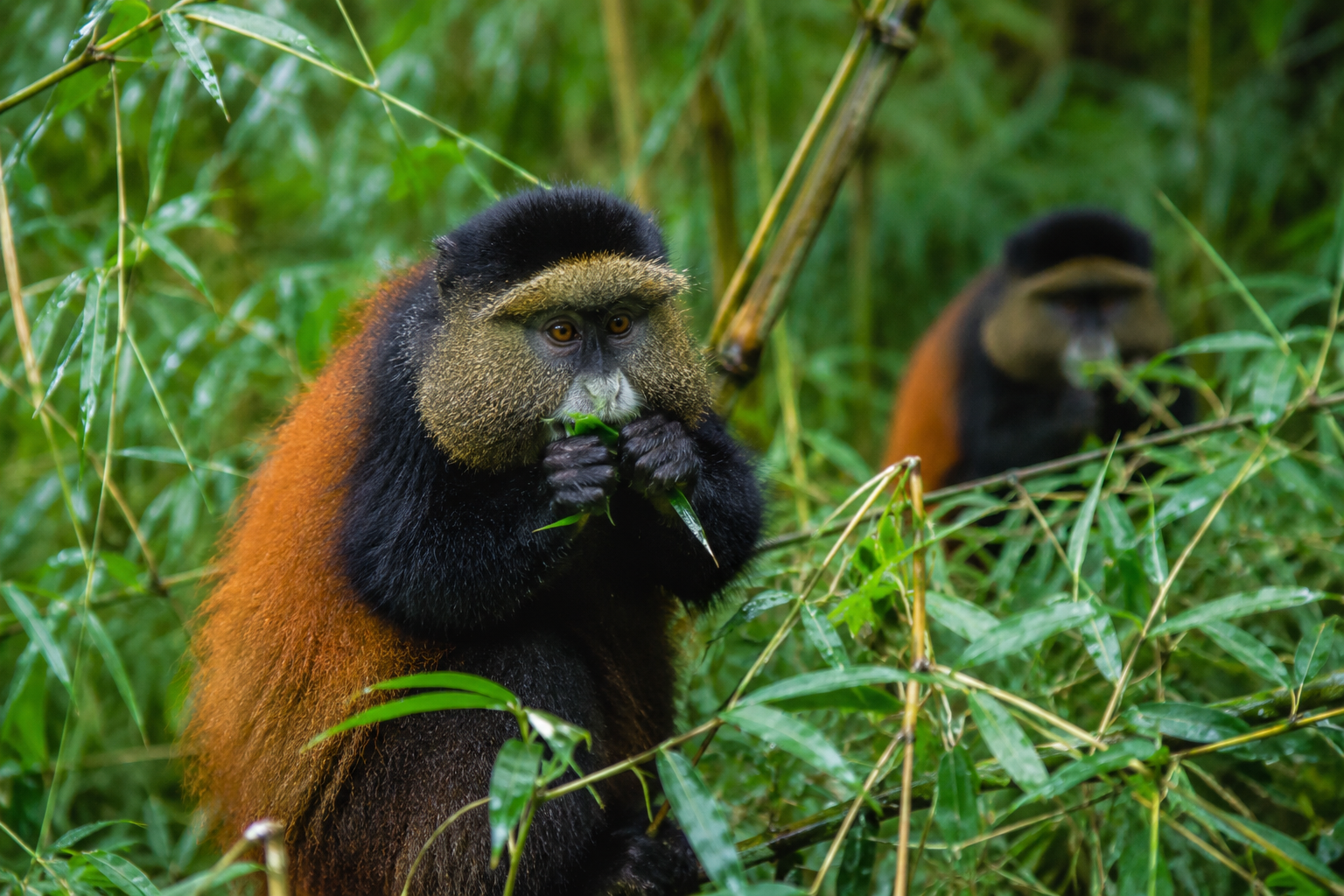
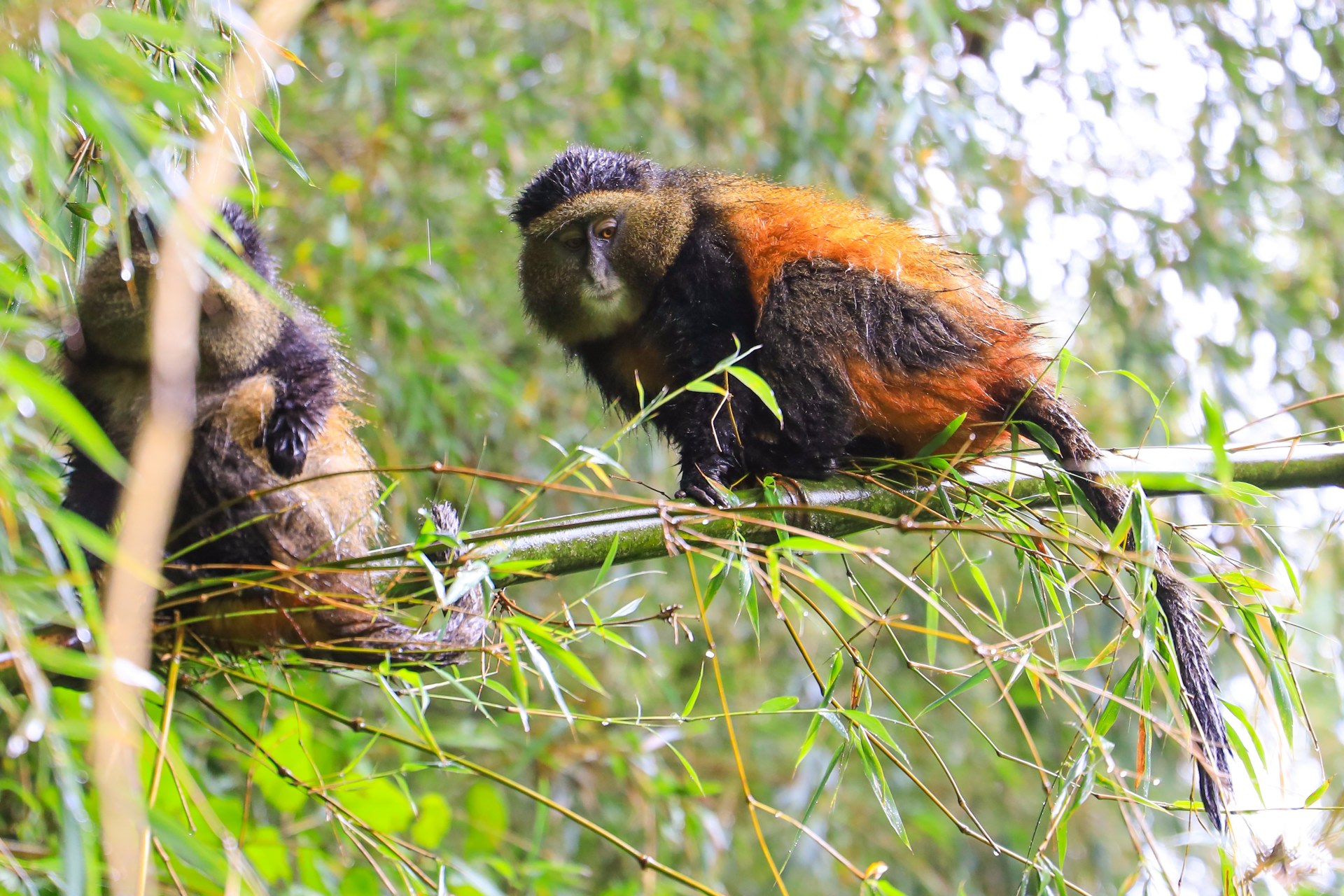
One of the most noticeable differences between golden monkeys and other African primates is their distinctive golden-orange colouring. Their attractive appearance makes them particularly recognisable when moving through the green bamboo forests of the Virunga Mountains. Although they share certain characteristics with other members of the blue monkey group, golden monkeys possess striking golden patches across parts of their bodies, particularly around their backs and flanks. This colouring creates a beautiful contrast with the surrounding forest vegetation.
Compared with mountain gorillas, chimpanzees, and baboons, golden monkeys have a relatively smaller body structure, long limbs, and a long tail that helps with balance while moving through vegetation. Their agile bodies allow them to climb, jump, and travel rapidly between bamboo stems and branches. These physical adaptations are especially useful in their mountainous forest environment, where efficient movement is important for locating food and avoiding potential threats.
Furthermore, their expressive faces, active movements, and social interactions make them fascinating subjects for wildlife photography. Unlike larger primates that may spend considerable time resting or feeding on the ground, golden monkeys are often observed moving energetically through vegetation. Their distinctive appearance and forest-adapted behaviour therefore make them one of the most memorable primate species encountered during Uganda and Rwanda wildlife safaris.
Where Do Golden Monkeys Live Compared With Other African Primates?
What Makes Their Natural Habitat Unique?
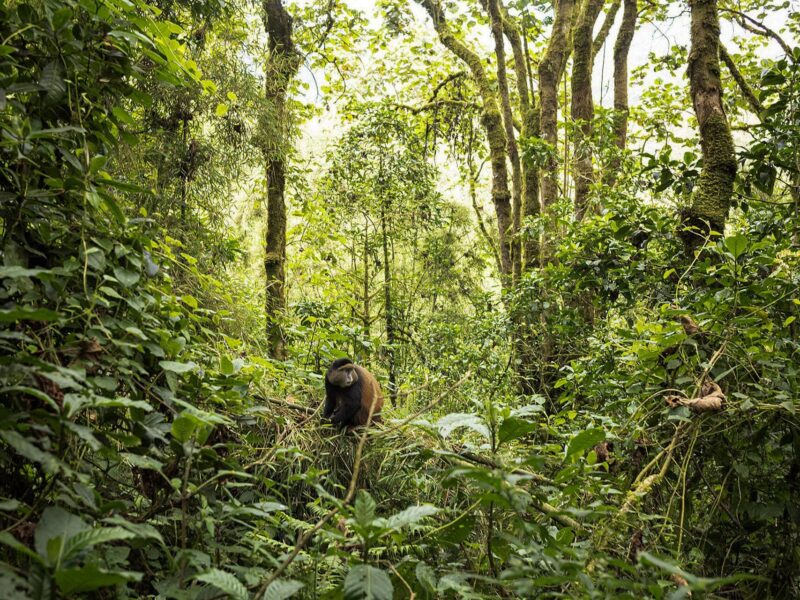
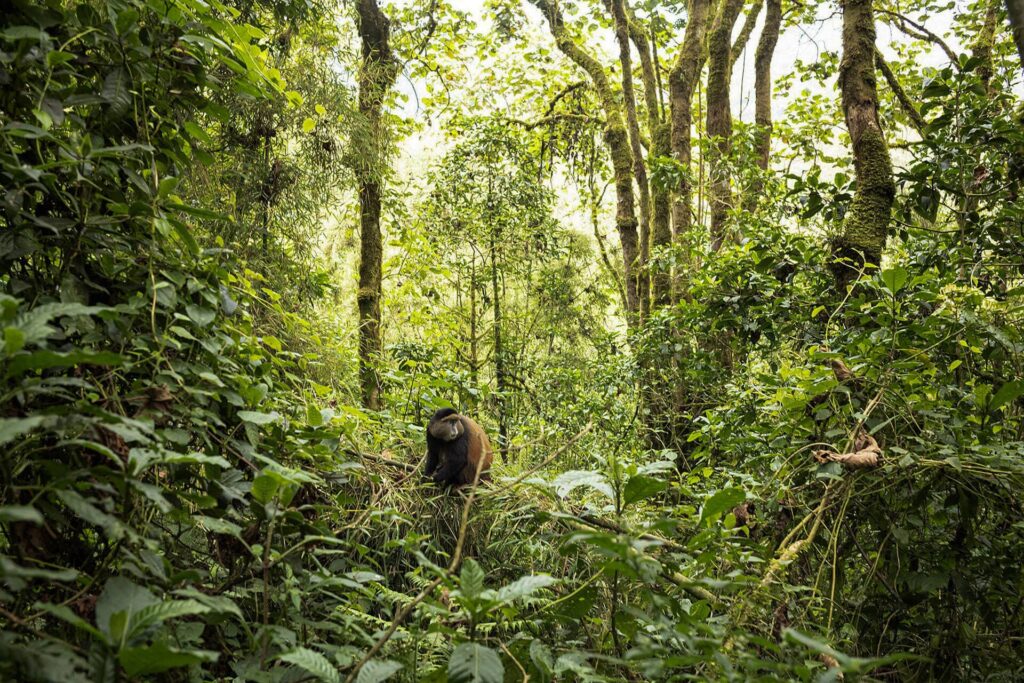
Golden monkeys are particularly associated with the Virunga Mountain ecosystem, which extends across southwestern Uganda, northwestern Rwanda, and the Democratic Republic of Congo. This high-altitude environment contains bamboo forests, montane vegetation, and volcanic landscapes that provide suitable living conditions for these specialised primates.
Unlike chimpanzees, which occupy a wider range of tropical forest environments, or baboons, which can live in savannahs and woodland habitats, golden monkeys have a more restricted geographical distribution. Their close association with bamboo-rich forests is one of the most important characteristics distinguishing them from many other African primates.
In Uganda, Mgahinga Gorilla National Park provides an important protected habitat for golden monkeys. Rwanda’s Volcanoes National Park is another major destination where visitors can encounter habituated golden monkey groups. Both protected areas form part of the wider Virunga Conservation Area and play an important role in maintaining the ecological conditions needed for their survival.
The specialised nature of their habitat also makes conservation particularly important. Forest degradation, habitat fragmentation, and human disturbance can affect the availability of suitable feeding and resting areas. Protecting these mountain forests therefore benefits not only golden monkeys but also other wildlife species that depend on the same ecosystem.
How Is Golden Monkey Behaviour Different From Other African Primates?
What Makes Their Social Activities Fascinating?
Golden monkeys are highly active and social animals that live in groups containing several individuals. Their daily activities include feeding, grooming, communicating, playing, and moving together through the forest. These interactions create opportunities for visitors to observe fascinating social behaviours that may differ from those of larger African primates.
Unlike mountain gorillas, which generally move through the forest at a slower pace and spend considerable time feeding on vegetation, golden monkeys are particularly energetic. They frequently jump between bamboo stems, climb through branches, and move quickly while searching for food. Their agility allows them to use the forest environment efficiently.
Grooming is another important social activity. Individuals may groom one another to maintain relationships, strengthen social bonds, and remove dirt or parasites. Younger monkeys are often particularly playful, creating entertaining interactions within their groups. Communication through vocalisations and body movements also helps maintain social relationships.
For travellers participating in golden monkeytracking, these behaviours provide a fascinating opportunity to observe the natural lives of wild primates. Rather than simply seeing animals from a distance, visitors can appreciate how social relationships, movement, and feeding activities contribute to their survival.
What Do Golden Monkeys Eat Compared With Other African Primates?
Which Foods Make Their Diet Special?
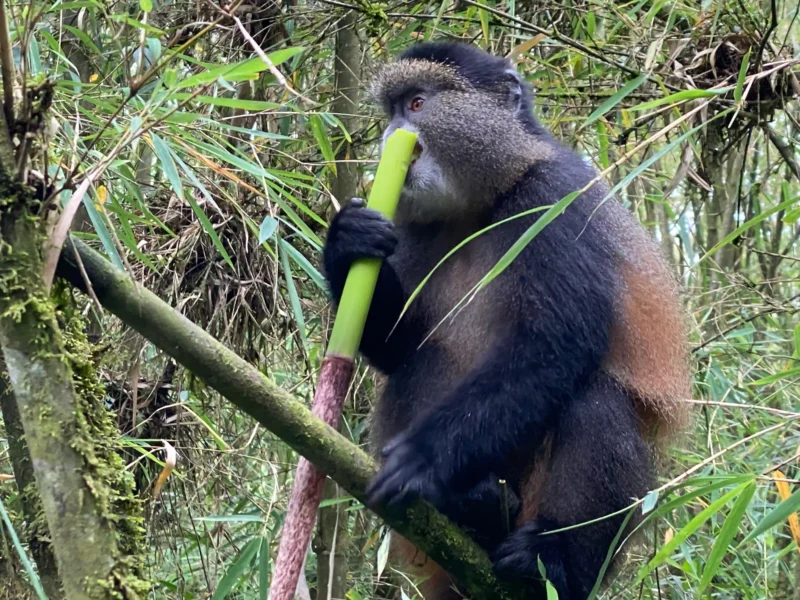
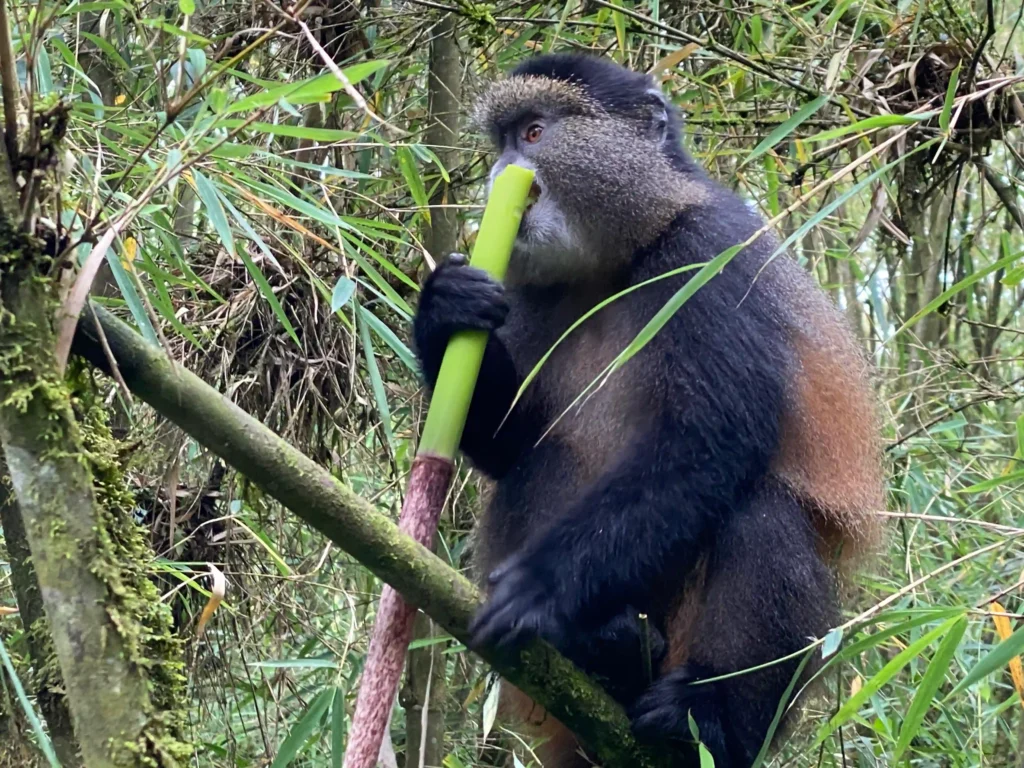
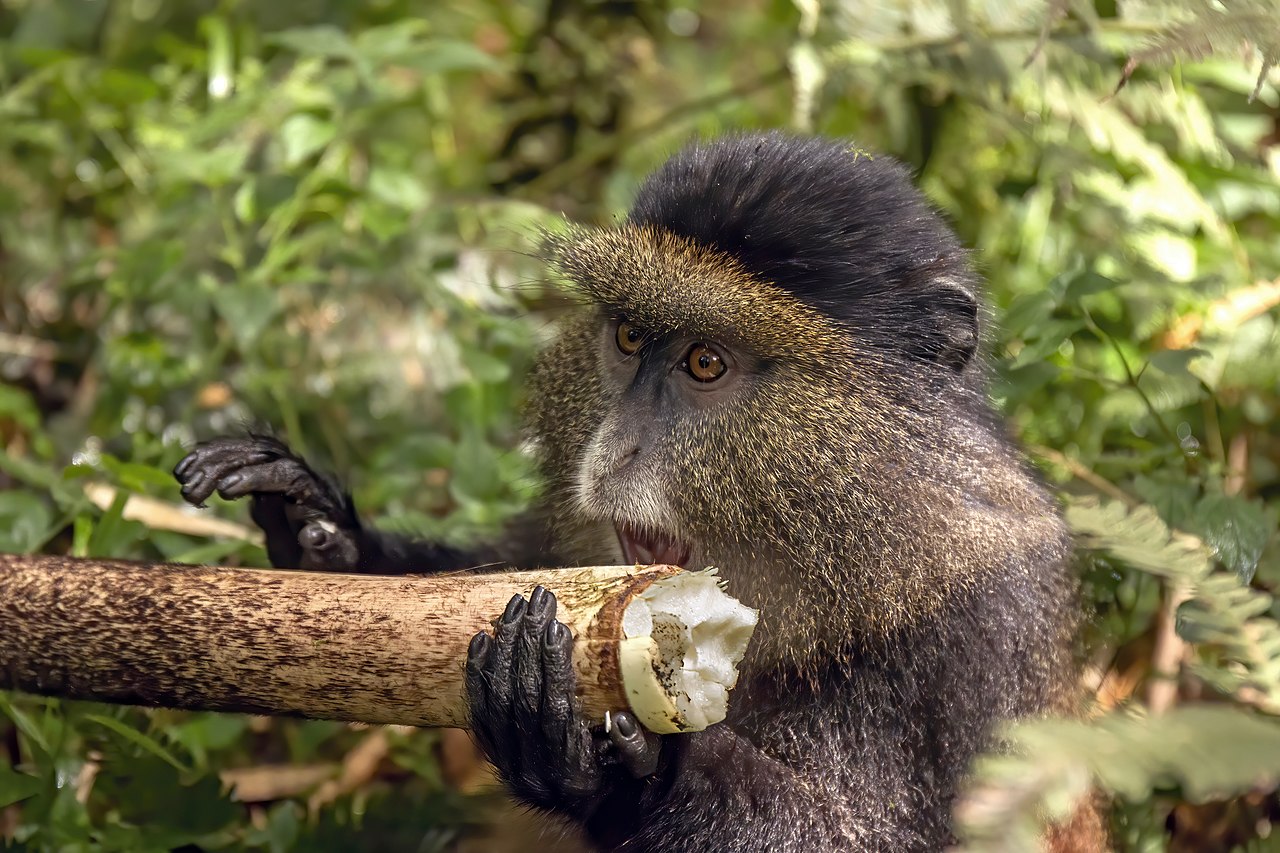
Golden monkeys are primarily plant-eating primates, and their diet consists of bamboo shoots, leaves, fruits, flowers, and other naturally available vegetation. Bamboo is particularly important because it is abundant within many sections of their preferred mountain forest habitat. This close relationship with bamboo vegetation is one of the features that distinguishes them from other African primates.
While chimpanzees have a varied diet that includes fruits, leaves, seeds, and occasional animal foods, golden monkeys rely heavily on plant-based resources. Their feeding patterns change according to food availability, vegetation growth, and seasonal environmental conditions.
Observing golden monkeys feeding is one of the highlights of a tracking excursion in Uganda or Rwanda. Visitors may see them selecting young bamboo shoots, chewing leaves, and searching for other edible plant materials. Their feeding activities demonstrate how specialised primates adapt to the resources available within their natural environment.
What Makes Golden Monkeys Different From Other African Primates?
What Are the Expectations During Golden Monkey Tracking?
Where Can Visitors Observe These Unique Primates?
Golden monkey tracking is available in Uganda’s Mgahinga Gorilla National Park and Rwanda’s Volcanoes National Park. The experience begins with a briefing from authorised park personnel before visitors enter the forest accompanied by experienced guides and trackers.
During the excursion, participants follow natural forest trails in search of habituated golden monkey groups. Walking conditions vary according to the location of the animals, weather, and terrain. Once the group is located, visitors generally have up to one hour to observe the monkeys during standard tracking, subject to park regulations.
Photography, learning about primate behaviour, and observing feeding activities are among the main highlights. For travellers interested in more immersive experiences, Uganda also offers a golden monkey habituation experience, subject to permit availability and current regulations.
When Is the Best Time for Golden Monkey Tracking in Uganda and Rwanda?
Which Season Offers the Most Comfortable Experience?
Golden monkey tracking takes place throughout the year in both destinations. Nevertheless, the main dry seasons, generally June to September and December to February, often provide more comfortable forest-walking conditions because trails may be less muddy.
Alternatively, rainy months offer lush vegetation and beautiful mountain scenery, creating excellent opportunities for nature photography. Although rainfall can make some sections challenging, tracking remains possible depending on weather and park operations.
At Kaara Safari Adventures Ltd, we recommend planning your visit according to your preferred travel dates, accommodation requirements, and other wildlife activities. Combining golden monkey tracking with gorilla trekking can create an exceptional Uganda or Rwanda primate safari.
Why Choose Kaara Safari Adventures Ltd for Golden Monkey Tracking?
How Do We Make Your African Primate Safari Special?
At Kaara Safari Adventures Ltd, we understand that an exceptional safari involves more than simply visiting a national park. International travellers deserve well-organised experiences, accurate destination information, comfortable transportation, and knowledgeable assistance throughout their journeys.
Our team can help organise golden monkey tracking permits, accommodation, transfers, and customised itineraries in Uganda and Rwanda. Visitors can also combine their primate experience with mountain gorilla trekking, chimpanzee tracking, birdwatching, cultural encounters, and other wildlife activities.
Furthermore, travellers interested in exploring both countries can enjoy carefully planned cross-border itineraries featuring Uganda Adventures and Rwanda Tours. Our commitment is to promote responsible tourism, respect wildlife conservation guidelines, and provide meaningful opportunities for visitors to appreciate Africa’s natural heritage.
What Should You Pack for Golden Monkey Tracking?
Which Items Are Essential for Your Forest Adventure?
Since golden monkey tracking takes place in mountainous forest environments, appropriate clothing and personal equipment are important.
Recommended items include:
-
Hiking boots: Waterproof footwear with good grip for uneven and muddy trails.
-
Long trousers: Protect your legs from vegetation and scratches.
-
Long-sleeved shirts: Provide additional protection during forest walks.
-
Rain jacket: Useful for unexpected mountain showers.
-
Garden gloves: Help protect your hands when navigating vegetation, where permitted.
-
Camera: Capture memorable wildlife encounters while following photography guidelines.
-
Binoculars: Useful for observing birds and other wildlife.
-
Drinking water: Maintain hydration throughout the excursion.
-
Small backpack: Carry personal essentials comfortably.
-
Insect repellent: Provides additional protection against biting insects.
-
Personal medication: Bring essential medication you may require.
Comfortable clothing and proper preparation will help you enjoy the forest adventure.
 Book Your Golden Monkey Tracking Safari With Kaara Safari Adventures Ltd
Understanding what makes golden monkeys different from other African primates reveals why these endangered animals deserve special attention. Their golden-orange colouring, energetic social behaviour, bamboo-based diet, and specialised mountain forest habitat distinguish them from many other primates found across the African continent.
Whether you want to encounter golden monkeys in Mgahinga Gorilla National Park or explore their natural habitat in Volcanoes National Park, Kaara Safari Adventures Ltd can help organise an unforgettable wildlife experience.
Contact Kaara Safari Adventures Ltd today and discover the fascinating world of golden monkeys through our professionally organised Uganda Safaris, Rwanda Safaris, and customised East African wildlife adventures.