What Equipment Should You Pack for a Birding Safari in East Africa?
October 28, 2026
Which Migratory Birds Can You See During East African Safaris?
October 28, 2026
What Binoculars Are Best for Birdwatching in Uganda, Kenya, Rwanda, and Tanzania?
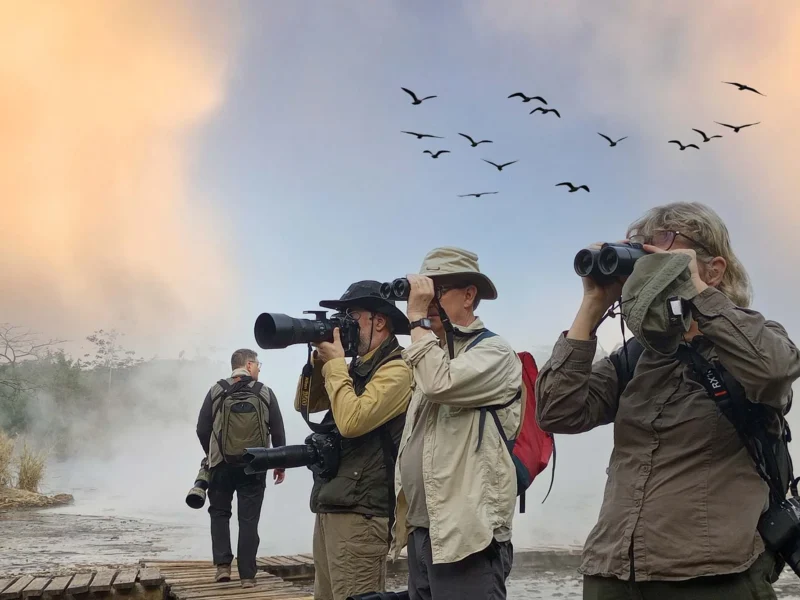
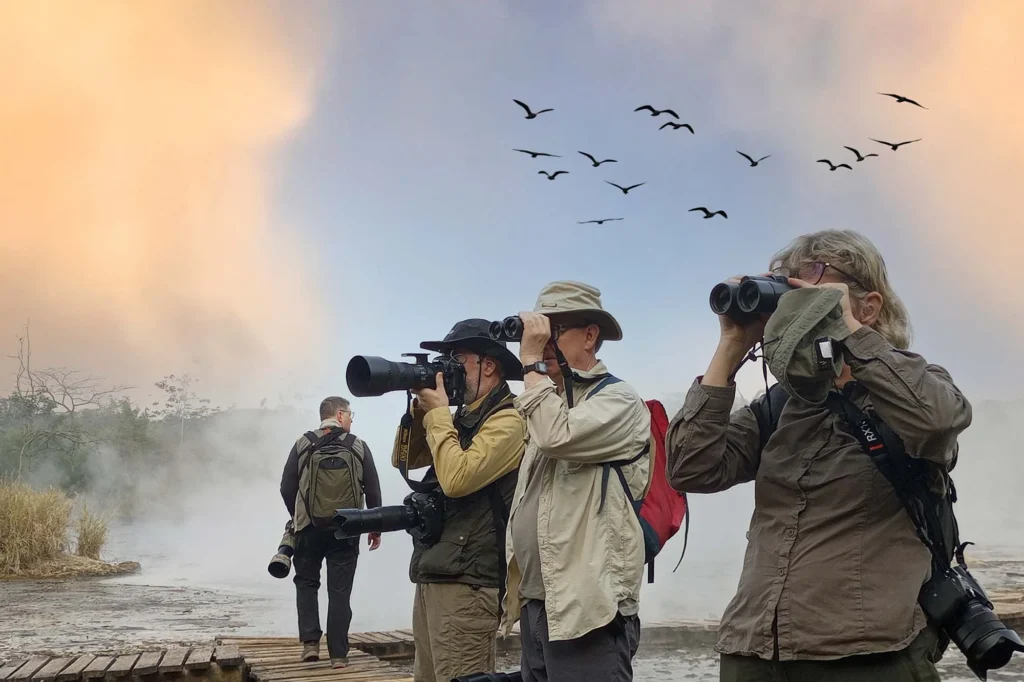
Good binoculars make it easier to notice field marks, colours, and behaviour without disturbing birds. East Africa’s birding habitats range from shaded forests and papyrus wetlands to bright lakeshores and open savannahs. A suitable pair should be clear, comfortable, and practical for the conditions you expect. The most expensive model is not automatically the best choice. Fit, optical quality, ease of use, and durability matter more than buying equipment with specifications you may not need.
What Binoculars Are Best for Birdwatching in Uganda, Kenya, Rwanda, and Tanzania? Is 8×42 or 10×42 better?
Both configurations are popular among birdwatchers. An 8×42 pair magnifies a subject eight times and often provides a wider field of view and a steadier image. This can be useful in forests, where birds may move quickly between branches. A 10×42 pair offers greater magnification, which can help when observing distant birds in open country or across wetlands. However, the image may appear shakier, especially when you are tired or holding the binoculars for long periods.
What do magnification and lens diameter mean?
The first number indicates magnification. The second number refers to the diameter of the objective lenses in millimetres. Larger objective lenses can gather more light, but they also tend to add weight and bulk. A 42 mm lens is a versatile choice for many safari conditions. Compact binoculars can be easier to pack, although some models may be less comfortable in low light. If possible, try several pairs before purchasing and compare brightness, focus speed, sharpness, and weight.
Which features matter in East African conditions?
Look for comfortable eye cups, smooth focusing, reliable construction, and water resistance. Fog-resistant designs can be useful when moving between cool mornings and humid conditions. A secure neck strap or harness helps prevent drops and distributes weight more comfortably. Lens caps and a padded case offer additional protection from dust and rain. No binocular is completely maintenance-free, so clean lenses with suitable materials and follow the manufacturer’s instructions.
How should beginners choose a pair?
Beginners should choose binoculars that feel natural to hold and are simple to focus. A clear image and comfortable fit encourage regular use. Visit a reputable retailer and test the binoculars at different distances if possible. Check whether the eye cups suit your vision and whether you can see the full image without straining. If you wear glasses, ask about eye relief and try the binoculars while wearing them.
Do you need a spotting scope as well?
A spotting scope is optional for most general birding safaris. It can be useful for distant waterbirds, shorebirds, and species across broad open spaces. However, it needs a tripod and takes more time to set up. Travellers who prefer walking trails or forest birding may find binoculars more practical. Discuss your target species and itinerary with your guide before deciding whether extra optics are worthwhile.
How can you protect binoculars on safari?
Keep binoculars in a padded case when they are not in use. Avoid placing them loose beside food, water bottles, or other objects that could scratch the lenses. Use a soft lens cloth and a blower designed for optics rather than wiping grit across glass. During boat trips or rain, use protective covers and secure the strap. Never leave binoculars in direct sunlight inside a closed vehicle for long periods.
Frequently asked questions
- Are expensive binoculars necessary?
No. A reliable mid-range pair with good optics can serve many travellers well.
- Should I choose 8x or 10x magnification?
Eight-power binoculars are often easier to hold steady; ten-power binoculars can help with distant subjects. Personal preference matters.
- Can I share binoculars with a travel companion?
Yes, but each person may need to adjust the focus and diopter setting for their eyesight.
- Can the safari operator provide binoculars?
Ask before booking- Do not assume that loan equipment is available unless the operator confirms it.
Choose equipment that suits your safari
Consider your budget, experience, target habitats, and comfort before purchasing binoculars. Kaara Safari Adventures Ltd can help you discuss the style of birding trip you want in Uganda, Kenya, Rwanda, or Tanzania, so you can prepare suitable equipment and realistic expectations for the journey.