Best Time of Year for Birding Safaris in East Africa
October 27, 2026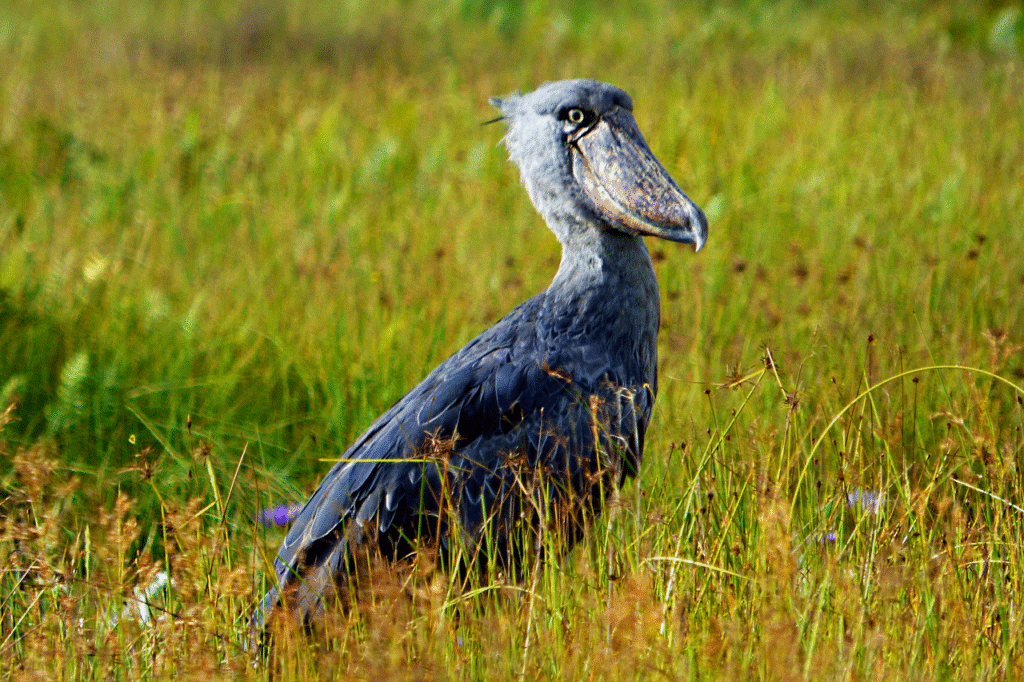
Where Can You See the Shoebill Stork During a Uganda Birding Safari?
Why Is the Shoebill a Highlight of Uganda Birding?
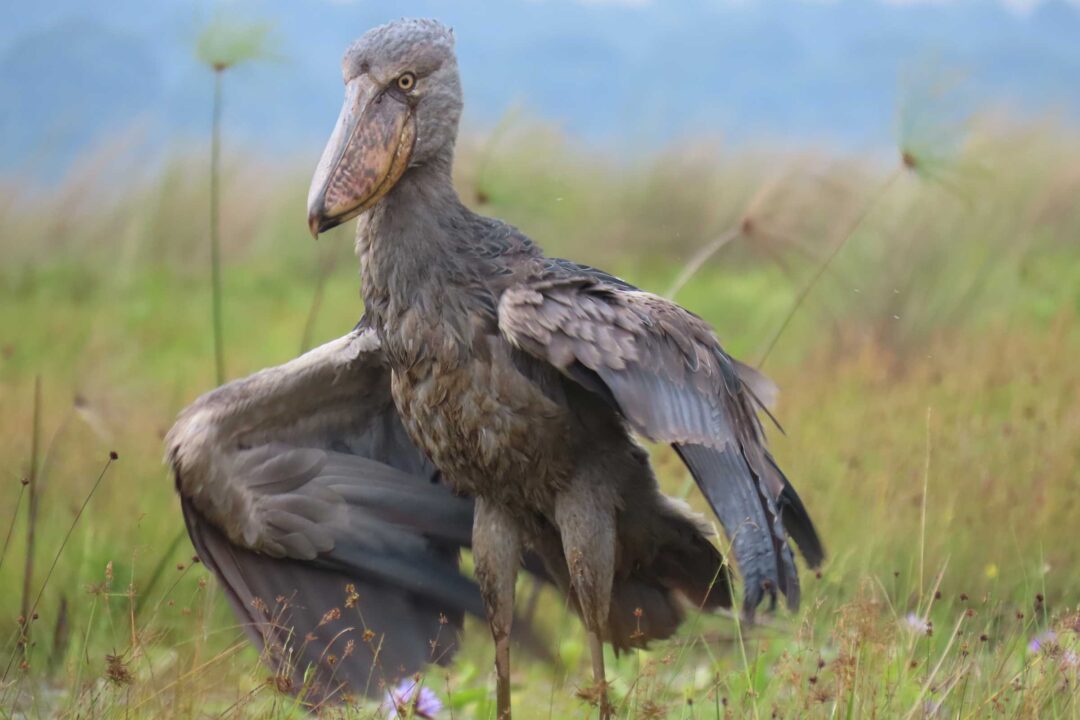
The shoebill is one of Africa’s most distinctive and sought-after birds. Its large shoe-shaped bill, tall body, and patient hunting style make it memorable for birdwatchers and wildlife photographers. Uganda is a well-known destination for travellers hoping to see this unusual wetland species, particularly around Mabamba Bay on the edge of Lake Victoria. However, a shoebill is a wild bird, not an attraction that can be guaranteed on demand. The best approach is to visit suitable habitat with an experienced local guide and allow enough time for a respectful search.
A Uganda birding safari focused on the shoebill can also introduce visitors to papyrus wetlands, channels, waterbirds, and the wider ecology of Lake Victoria. Mabamba Bay is frequently included in birding itineraries because guided boat trips can reach suitable wetland areas. Other wetland locations may be relevant depending on current access, local conditions, and the objectives of the trip. Before travelling, confirm the excursion’s operating arrangements and the exact site being visited.
The shoebill is often the main target, but a good birding experience should not depend on one sighting alone. Wetland habitats support many other birds and provide opportunities to learn about the relationship between water levels, vegetation, fish, and wildlife. Responsible viewing protects this sensitive environment and helps ensure that the search does not disturb the species visitors have travelled to see.
Why Is Mabamba Bay a Well-Known Shoebill Site?
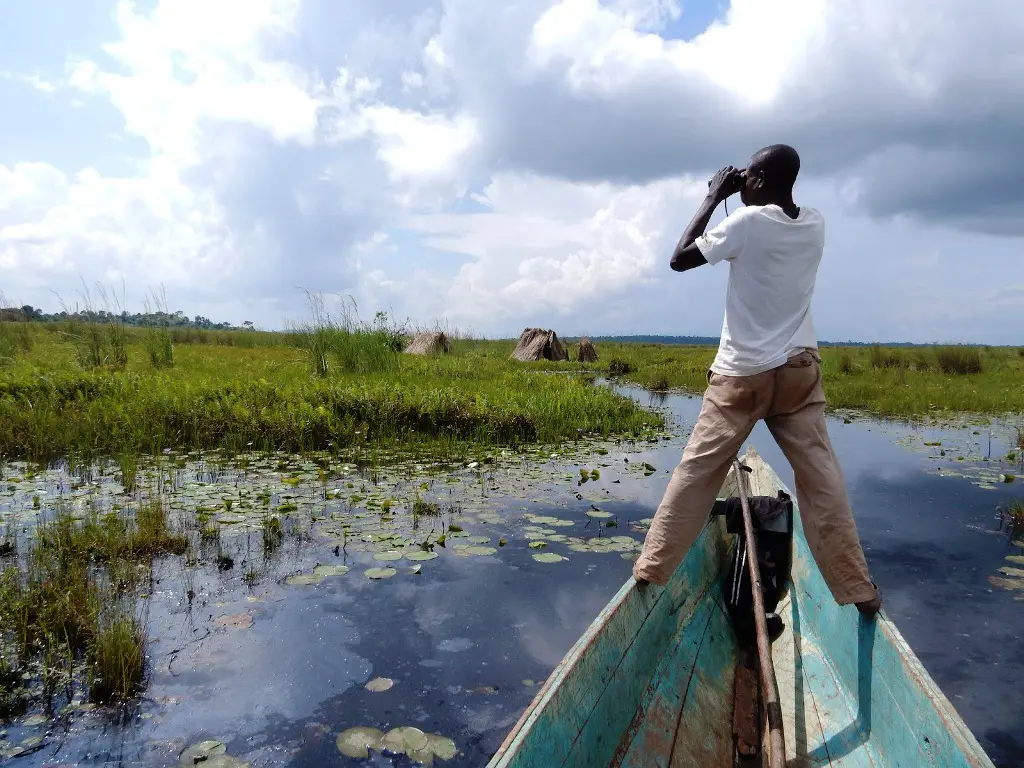
Mabamba Bay is a wetland on the edge of Lake Victoria and is widely recognised among birders for guided shoebill searches. The area includes papyrus and wetland channels that can provide suitable habitat for the species. Visitors commonly explore by boat with local guides who know the waterways and can identify promising areas. The route and success of a search depend on water conditions, weather, and where the bird is moving.
A boat excursion can also reveal other wetland birds and offer a closer look at the ecosystem. Visitors should remain quiet, follow the guide’s instructions, and avoid sudden movement that may disturb wildlife. Boat operators should maintain a respectful distance and never pursue a bird simply to obtain a closer photograph. If a shoebill is not present in the area searched, the trip can still be valuable for observing wetland life and understanding local conservation efforts.
Mabamba is not a national park, so travellers should confirm the local arrangements, fees, transport, and guide services included in their booking. Departure times and trip length may vary. Allow sufficient time for the excursion and avoid arranging a tight onward transfer that leaves no room for delays.
Where Can You See the Shoebill Stork During a Uganda Birding Safari?
Can Shoebills Be Seen in Other Parts of Uganda?
Mabamba Bay is the best-known option for many visitors, but shoebills are associated with suitable wetland habitats in Uganda beyond one location. Whether another site is appropriate for a particular trip depends on current local knowledge, access arrangements, conservation rules, and the time available. Not every wetland is accessible to visitors, and a location should not be chosen solely because a shoebill has been reported there in the past.
A specialist birding guide can advise whether alternative wetlands are suitable during your travel period. Local reports can change quickly because the birds move naturally, and a past sighting does not guarantee a future encounter. If the shoebill is your highest priority, build the itinerary around known suitable habitat and allow enough time for searching rather than attempting several distant locations in one day.
Responsible tourism also means respecting private land, community-managed areas, and conservation restrictions. Use authorised guides and follow local instructions. Avoid entering wetlands without permission, disturbing vegetation, or approaching wildlife on foot or by boat outside permitted arrangements.
When Is the Best Time to Search for a Shoebill?
Shoebill searches can be planned throughout the year, but local water conditions, weather, and bird movements influence the experience. Wetland access and the location of birds may change with seasonal conditions. It is therefore best to consult a local guide about the expected conditions for your intended dates rather than assuming a particular month guarantees a sighting.
Morning excursions are commonly used for birding because temperatures may be more comfortable and the day can be planned around other activities afterward. However, the best departure time depends on the operator’s schedule, local conditions, and the specific area being explored. If the shoebill is a key objective, avoid rushing the visit and ask how much time is allocated to the search.
Keep expectations realistic. Even experienced guides cannot control where a wild bird chooses to feed or rest. A responsible operator will explain this uncertainty and will not promise a guaranteed sighting. Flexibility, patience, and respect for the wetland are essential parts of the experience.
What Happens During a Shoebill Boat Excursion?
A typical excursion begins with transport to the wetland departure point and a briefing from the local guide or boat operator. Visitors then travel through suitable channels while the guide scans the habitat and explains what to look for. The search may involve slow movement, quiet observation, and waiting at promising locations. Duration depends on the arrangement booked and local conditions, so confirm the expected length before departure.
Binoculars can help visitors observe birds at a distance, while a camera with a suitable zoom lens may be useful for photography. Even when the shoebill is not found, the outing may offer views of other wetland birds and a better understanding of papyrus habitat. Visitors should follow safety instructions, wear suitable clothing, and protect cameras and phones from splashes or rain.
Do not ask the guide to chase, corner, feed, or disturb a bird. The objective is to observe natural behaviour, not force a close encounter. Respectful distance and quiet conduct help protect wildlife and make the experience better for everyone.
What Should You Pack for a Shoebill Search?
Bring binoculars, a camera if desired, a hat, sunscreen, insect repellent, and a reusable water bottle. Lightweight neutral clothing is suitable for many wetland outings, while long sleeves and trousers can help protect against sun and insects. A light waterproof jacket is useful because showers can develop quickly. Wear shoes suitable for getting on and off a boat and walking around a wetland departure point.
Protect electronic equipment with a weather-resistant bag or dry pouch. Bring spare batteries and memory cards if photography is important. A notebook or offline birding app can help record sightings, but keep devices secure and avoid distracting yourself during safety briefings. Carry personal medication and any essentials you may need during the outing.
Ask your operator whether life jackets and other safety equipment are provided and follow the boat crew’s instructions. Never assume a particular item is supplied unless it has been confirmed. Pack lightly enough to move safely around the boat and landing area.
How Can You Photograph a Shoebill Responsibly?
A shoebill photograph can be a memorable record of a birding trip, but ethical behaviour matters more than obtaining a close image. Use a suitable zoom lens or binoculars rather than asking the boat to approach too closely. Keep movement and noise low, listen to the guide, and accept that vegetation or distance may limit the photograph. Natural behaviour should never be interrupted for a better angle.
Avoid flash if it could disturb the bird, and do not use playback or bait to attract it. Stay within authorised routes and never step into sensitive vegetation or leave a boat without permission. If the bird moves away, allow it to do so. Ethical photography records wildlife as it behaves naturally and avoids creating stress or changing its activity.
Photographers should also respect the privacy of local people and ask permission before taking identifiable portraits during community visits. Responsible practices help protect the wetland and maintain a positive relationship between tourism and local conservation.
How Can Kaara Safari Adventures Ltd Arrange a Shoebill Safari?
Kaara Safari Adventures Ltd can help organise a shoebill-focused excursion or include it in a wider Uganda birding safari. Share your travel dates, group size, interests, and whether you want to combine the wetland visit with national parks, wildlife viewing, or other experiences. A clear plan helps coordinate transport, local guiding, departure times, and accommodation where needed.
Before booking, confirm the exact location, expected excursion length, transport arrangements, fees, inclusions, and cancellation terms. Ask whether the operator can provide current guidance on local conditions and what happens if weather affects the trip. Because sightings cannot be guaranteed, a responsible itinerary should include other birding opportunities or flexible time rather than depending entirely on one bird.
Choose a provider that respects local guides, community arrangements, and wetland conservation. Follow instructions on the day and avoid any practice that disturbs wildlife. Good planning can make the search comfortable and meaningful while keeping expectations realistic.
Frequently Asked Questions About Shoebill Safaris in Uganda
Where is the best-known place to see a shoebill in Uganda? Mabamba Bay, on the edge of Lake Victoria, is a widely known destination for guided shoebill searches.
Is a sighting guaranteed? No. Shoebills move naturally, and sightings depend on conditions and chance.
Is Mabamba Bay a national park? No. It is a wetland site often included in birding itineraries.
Can I photograph a shoebill? Photography is generally possible when conditions allow, but visitors must maintain a respectful distance and follow the guide’s instructions.
Can I combine the excursion with other activities? Yes. It can be included in a broader Uganda birding or wildlife itinerary, provided travel times are realistic.
Plan Your Uganda Shoebill Birding Excursion
Mabamba Bay is a well-known destination for travellers hoping to see the shoebill during a Uganda birding safari. Its papyrus wetlands and channels provide habitat for this remarkable bird, and guided boat excursions offer a responsible way to search. Other wetland locations may be considered when local knowledge, access, and the itinerary support them.
Kaara Safari Adventures Ltd can help organise the excursion as a standalone experience or part of a longer birding holiday. Confirm the details in advance, allow sufficient time, and remember that wild sightings are never guaranteed. By respecting local guidance and the wetland environment, visitors can enjoy a meaningful birding experience while supporting responsible nature tourism.